
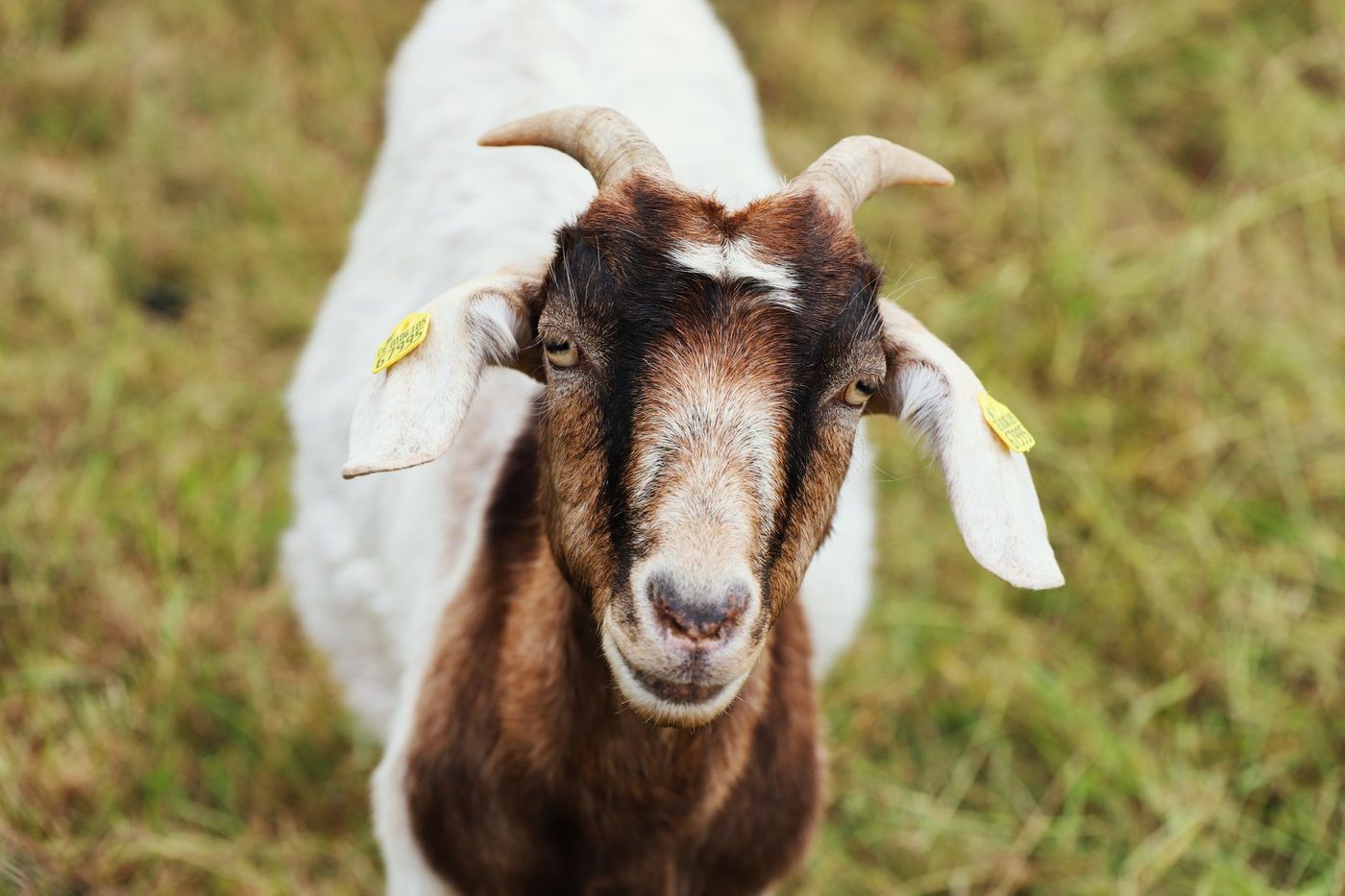
A pet goat in England comes with legal paperwork. GOV.UK’s collection of guidance on keeping sheep and goats in England says the rules apply to anyone with permanent or temporary responsibility for the day-to-day care or control of sheep or goats, including a sheep or goat kept as a hobby or as a pet. This guide follows seven GOV.UK pages in the order the paperwork arises. It covers England only: the same collection points to separate rules for Wales, Scotland and Northern Ireland.
Before the Goats Arrive: A Holding Number and a Herd Mark
GOV.UK says a county parish holding (CPH) number must be obtained for land and buildings used to keep livestock for any purpose, and it lists a pet, such as a goat, among the examples. The number means the government knows where livestock are kept and can trace them to help prevent and control disease. An application can be made a maximum of 6 weeks before livestock arrive, and the Rural Payments Agency issues the number.
A second registration follows. GOV.UK says anyone who keeps livestock in England, including as a hobby or pet, must get a flock or herd mark from the Animal and Plant Health Agency (APHA), after registering for a CPH number and before moving livestock onto the land. APHA asks for the CPH number and the species kept, how many and for what purpose, and the process usually takes 10 working days. Sheep and goat tags must be bought from approved suppliers, who ask for the CPH number and the flock or herd mark.
Tagging: What Goes in the Ears
GOV.UK’s page on tagging goats calls correct tagging a legal requirement so that animals can be traced. A kid must be tagged on the holding where it was born, within 6 months of birth if reared indoors or within 9 months if reared outdoors, or before it leaves the holding if that is sooner. For a kid that is not intended for slaughter, and for any goat kept past 12 months old, an approved combination of 2 tags is required, and the page says that a kid should be given 2 adult tags if it is not certain whether it will go for slaughter.
A pair of adult tags shows “UK”, a 6 digit flock mark and a 5 digit official identification number unique to the goat. Owners can add management information, but their own management tags cannot be yellow, black or red or carry the letters “UK”. Adult goats that are bought keep their original tags, and lost or damaged ear tags or pastern bands must be replaced within 28 days of the loss or damage being noticed. In an emergency an untagged goat may be taken to a vet, with the goat tagged as soon as it is back and the visit recorded in the holding register.
The Holding Register
A sheep and goat keeper must keep a holding register for each holding. GOV.UK says a keeper includes someone responsible for the day-to-day care and control of any sheep or goats, including those kept as pets, and that ownership is not required. The register records:
- the first tagging of each kid;
- replacement tags;
- movements on and off the holding;
- deaths on the holding.
Each of these must generally be entered within 36 hours. The register is kept for 3 years after the last animal dies or leaves. GOV.UK accepts several formats: the Livestock Information Service online register, farm software, a spreadsheet or paper such as a notebook, or the Defra template. The register must be shown when someone such as a local council asks to see it.
Every Time a Goat Moves
GOV.UK’s movement guidance says a holding includes a home or garden where a pet is kept, and that all movements of sheep and goats on or off a holding must be reported and recorded. Moves need not be reported to or from a vet for emergency treatment, or to or from land with the same CPH number. Within 10 miles of the main area where the animals are kept, moves to land registered under the same CPH number, or to temporary land linked through a temporary land association, do not need to be reported and recorded if the animals will not mix with someone else’s livestock.
A standstill rule applies as well. If cattle, sheep or goats arrive from a different holding, none of cattle, sheep, goats or pigs may be moved off for 6 days afterwards, and day 1 is the day after arrival. The page notes exemptions, including movements directly to slaughter.
Once a Year: The Inventory
GOV.UK says the keeper of sheep or goats must complete an inventory every year. A letter or email from Defra arrives at the end of November, and the inventory must be completed and returned by 31 December, online or by post. The pages word the counting date in two ways. The inventory page says the holding register must also be updated with the number of sheep and goats on the holding on 1 December, while the holding register page says to record the total at the end of each year.
If Keeping Stops
The holding register page says the Rural Payments Agency and APHA must be told as soon as possible if a keeper stops keeping sheep and goats. It also says that when an animal dies on a holding, or at home if it is a pet, the rules on safe and legal disposal of the animal must be followed.
The bottom line
In England, GOV.UK says the tracing rules apply to a goat kept as a pet: a CPH number from the Rural Payments Agency, a herd mark from APHA, ear tags or other approved identifiers within the time limits for kids, a holding register with entries within 36 hours, reports of movements, the 6 day standstill rule where it applies and an annual inventory due by 31 December. Moves to land under the same CPH number, and emergency trips to a vet, are among the exceptions on the movement page. Wales, Scotland and Northern Ireland have separate rules.
Sources
- Keeping sheep and goats in England, GOV.UK (gov.uk), last public update 11 July 2024, read 13 November 2026
- Apply for a county parish holding (CPH) number, GOV.UK (gov.uk), last public update 9 November 2026, read 13 November 2026
- Register livestock to get a flock or herd mark, GOV.UK (gov.uk), last public update 15 June 2023, read 13 November 2026
- Tag goats with ear tags, pastern bands and boluses, GOV.UK (gov.uk), last public update 1 June 2014, record modified 21 October 2026, read 13 November 2026
- Sheep and goat keepers: how to keep a holding register, GOV.UK (gov.uk), last public update 4 September 2023, record modified 21 October 2026, read 13 November 2026
- Moving sheep and goats: what keepers need to know, GOV.UK (gov.uk), last public update 4 December 2023, record modified 21 October 2026, read 13 November 2026
- Sheep and goat keepers: complete your annual inventory, GOV.UK (gov.uk), last public update 10 November 2025, record modified 21 October 2026, read 13 November 2026