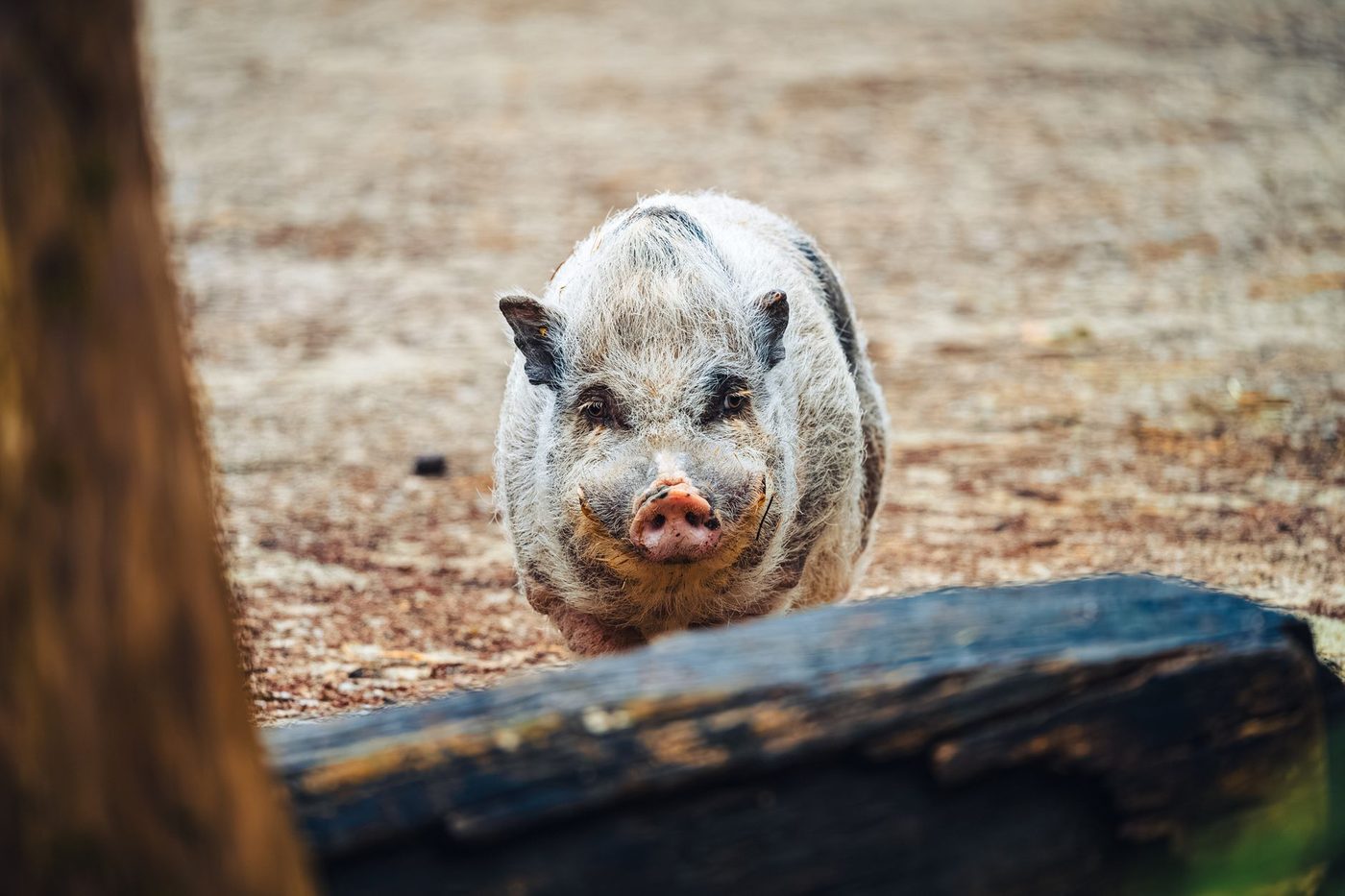
In England, a pig kept as a pet is not treated as just a companion animal. GOV.UK guidance for keepers says that anyone who keeps a pig or ‘micropig’ as a pet is considered a pig keeper and must follow the same traceability and welfare rules as pig farmers. This article sets out what the GOV.UK pages for England say about registration, identification, walking, records and feeding. It is general information.
What does the law expect of a pig keeper?
The GOV.UK guidance “Keeping a pet pig or ‘micropig’” (published 31 December 2014, last updated 12 July 2023) says keepers are legally responsible for the welfare of their pig. They must look after it by providing a suitable place to live, giving it a suitable diet, making sure it can behave naturally and normally, and protecting it from pain, suffering, injury and disease. Keepers must also follow good hygiene and biosecurity standards to help prevent the introduction and spread of disease.
The page applies to England and links to separate guidance for Scotland and for Wales, which is not covered here.
The order of paperwork before a pig arrives
- County parish holding (CPH) number. The pet pig page says a keeper must get a CPH number from the Rural Payments Agency (RPA) for the land and buildings where the pig will be kept. The separate RPA guidance says a CPH number is needed for livestock kept as a business, a hobby or a pet, gives a goat as a pet example, and lists pigs among the livestock covered.
- Timing. The RPA guidance says an application can be made a maximum of 6 weeks before livestock arrive, and it advises applying early.
- Herd mark. The pet pig page says that by law a keeper must register as a pig keeper with the Animal and Plant Health Agency (APHA) to get a herd mark. The APHA registration page says to register after getting the CPH number and before moving livestock onto the land, and to tell APHA the CPH number, the species, how many animals are kept and for what purpose. It says the process usually takes 10 working days.
- Identification. The herd mark must be on the ear tag, tattoo or slap mark used to identify the pig before it moves from where it is kept.
The RPA guidance, last updated 22 July 2026, says the RPA shares registered information with APHA to get a flock and herd number and that APHA then sends an email with it, while the pet pig page and the APHA page speak of registering with APHA directly. The CPH page itself says the application process has changed, so the wording on the older pages may not match it.
Can a pet pig be taken for a walk?
The pet pig page says a keeper needs to apply to APHA for a licence to walk the pig outside the home or premises, with a map of the proposed route. APHA may not approve a route if it poses a health risk, and the examples given are routes that pass close to a livestock market, a pig farm or a fast food restaurant.
The licence must be carried whenever the pig is walked and has to be renewed every year. A walk under the licence does not have to be reported or recorded as a movement. The pig must still be tagged, tattooed or marked with its identification details before it goes anywhere away from home, and the page names a walk under licence and a trip to a vet as examples.
Movements, the holding register and the yearly count
Any other movement of the pig has to be reported through the electronic animal movement licensing service (eAML2), which requires registration. A record of all movements, known as a holding register, must also be kept.
Once a year, at a time the keeper chooses, the holding register must also record the number of pigs on the premises or land on that day and the total number normally kept there. The records can be digital or paper, must be kept for 3 years after the keeper stops keeping pigs, and must be shown to an RPA field officer if requested.
APHA must be told about a change of address or telephone number, a change to where the pig is kept, more pigs or a new species of pig, or the end of pig keeping. The RPA must be told of changes to the CPH details, including when a keeper stops keeping the pig.
Why kitchen leftovers are off the menu
The pet pig page is direct on this point: pigs cannot be fed catering waste from any domestic or commercial kitchen, including kitchens that only cater for vegetarians, and catering waste includes used cooking oil. It adds that pigs generally cannot be fed material of animal origin or products containing it.
The page lists some permitted items, including liquid milk or colostrum produced on the same holding where the pigs are kept, and former foodstuffs that contain rennet, melted fat, milk or eggs as long as these are not the main ingredient. Milk products, fishmeal and blood products are allowed only in some cases. Keepers who are unsure whether something can be fed are told to contact APHA, and pig food may come from a premises that handles material pigs cannot eat only if the premises has a procedure keeping the two apart that has been agreed with a local council.
If a pig dies at home
The page says a death at the home or premises does not have to be reported through eAML2, but the keeper must follow the rules to dispose of the animal safely and legally.
The bottom line
Read on 3 November 2026, the GOV.UK pages for England treat a pet pig as livestock: a CPH number from the RPA, a herd mark from APHA, identification before any movement, a walking licence, a holding register with a yearly count, and limits on what can be fed. The pages for Scotland and Wales are separate. The pet pig page was last updated in July 2023, while the CPH page was updated in July 2026 and says its application process has changed.
Sources
- Keeping a pet pig or ‘micropig’, Department for Environment, Food & Rural Affairs and Animal and Plant Health Agency on GOV.UK, published 31 December 2014, last updated 12 July 2023, read 3 November 2026 (gov.uk)
- Apply for a county parish holding (CPH) number, Rural Payments Agency on GOV.UK, published 9 October 2024, last updated 22 July 2026, read 3 November 2026 (gov.uk)
- Register livestock to get a flock or herd mark, Animal and Plant Health Agency and Defra on GOV.UK, published 15 June 2023, read 3 November 2026 (gov.uk)