
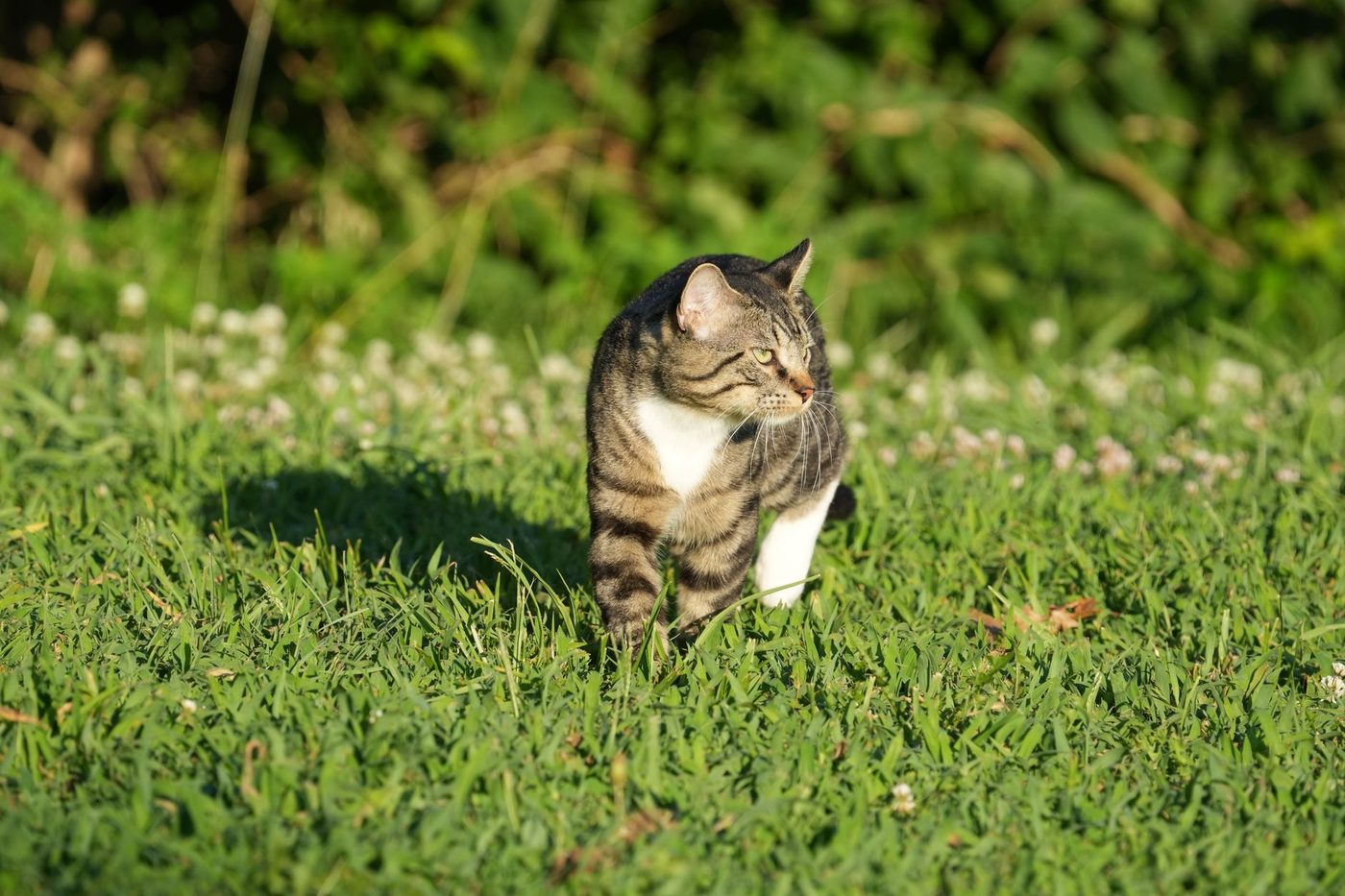
A dog wandering alone, or a cat that keeps turning up in the garden, may be lost, abandoned or simply out exploring. This guide follows what GOV.UK, the Environmental Protection Act 1990 as shown on legislation.gov.uk, Dogs Trust, the RSPCA and Cats Protection say about what a finder should do. All were read on 31 October 2026, and the charity and GOV.UK pages are undated. It is general welfare information, not veterinary advice. The dog rules below are for England and Wales unless Scotland is named.
First, danger, injury or aggression
The RSPCA says that if a dog appears sick or injured the finder should contact a local vet or animal centre, that emergency services are the contact if a dog is in imminent danger or in a dangerous location, and that a finder should never put themselves in danger. It also says to stay clear of a dog showing aggressive behaviour and to contact the local dog warden. Cats Protection says a cat in immediate danger, such as on a road, can be moved to safety if the finder is aware of their surroundings, and that a sick or injured cat should go to a local vet, phoning ahead. Cats Protection also says vets provide emergency treatment for sick or injured animals at no cost to the finder.
A dog that looks like a stray
Dogs Trust and the RSPCA both caution that the dog may not be a stray at all, but a pet that has wandered from its family. Dogs Trust says to check the collar for a tag if it is safe, and otherwise to contact the dog warden at the local authority, who will ensure the microchip is scanned. The RSPCA says to approach only if the dog is calm.
For England and Wales, GOV.UK says that a finder who knows the owner must return the dog to them, and one who cannot contact the owner must report the dog to the council. The Act’s England and Wales version says the finder must forthwith either return the dog to its owner or take it to the officer of the local authority for the area where it was found, and inform that officer where the dog was found.
Keeping the dog: three wordings
The sources do not use the same words, so each is reported as written:
- GOV.UK says a finder who wants to keep the dog should tell the council, that the finder may be allowed to keep it if the owner cannot be found, and that the council will probably check suitability first.
- The Act, in the England and Wales version, says a finder who wants to keep the dog must inform the council officer and give a name and address, and that a finder who keeps a dog under the section must keep it for not less than one month. In Scotland, the Act says a person who keeps a dog under the section for two months without it being claimed becomes its owner.
- Dogs Trust says that a finder who takes the dog home temporarily must by law tell the dog warden, that the finder is then obliged by law to keep the dog for 28 days, and that adopting means waiting a seven-day period (five days in Northern Ireland). It adds that legal ownership is not transferred in the meantime. The RSPCA says it is illegal to keep a stray dog and that a finder who wants to rehome one should leave details with the warden.
For handing a dog back, Dogs Trust suggests meeting the owner in a safe location such as a public place and taking a friend and a phone. Local council arrangements can differ.
Who scans, and who takes the dog in
The RSPCA lists contacting a local vet to scan for a microchip and reporting the dog to local rescue centres. It also says it cannot respond to calls about healthy stray dogs, and that stray dogs are the responsibility of the local authority’s dog warden. Dogs Trust says the warden ensures the scan, and that local vets and rehoming organisations cannot take strays directly from the public except in certain emergency situations.
A cat that looks like a stray
The legal pages read concern dogs. Cats Protection’s pages describe a different path. For a cat that seems healthy, it says to get the cat scanned for a microchip at a local vet, or to contact a local Cats Protection or other local animal welfare organisation if the cat cannot be transported. It says to avoid feeding the cat unless it is particularly underweight, because feeding may keep it coming back and some cats are on a special diet. It also suggests telling the local community with a post or poster, and fitting a paper collar with the finder’s contact details.
For a suspected feral cat, which Cats Protection describes as not socialised to humans, it says not to approach or handle the cat but to contact a local organisation.
Keeping a cat that has no owner
Cats Protection says a finder should first try to find the owner and can offer shelter meanwhile. Once the finder is sure there is no owner, the cat can be adopted, and it suggests microchipping.
The bottom line
For a dog in England or Wales, the sources agree on one point: report it to the council. GOV.UK and the Act both put that duty on the finder. They differ on what keeping the dog involves, with the Act saying one month, Dogs Trust 28 days and the RSPCA calling it illegal. For a cat, Cats Protection points to a vet scan, local community notices and a local welfare organisation, and none of the pages read describes a council step. Sick, injured or endangered animals go to a vet or emergency services first, according to the RSPCA and Cats Protection.
Sources
- Report a stray dog, GOV.UK, page undated, read 31 October 2026 (gov.uk)
- Environmental Protection Act 1990, section 150, up to date to 31 October 2026 per the page, read 31 October 2026 (legislation.gov.uk)
- What do I do if I’ve found a stray dog?, Dogs Trust, page undated, read 31 October 2026 (dogstrust.org.uk)
- Found a lost or stray dog?, RSPCA, page undated, read 31 October 2026 (rspca.org.uk)
- Found a cat? Here’s what to do, Cats Protection, page undated, read 31 October 2026 (cats.org.uk)