
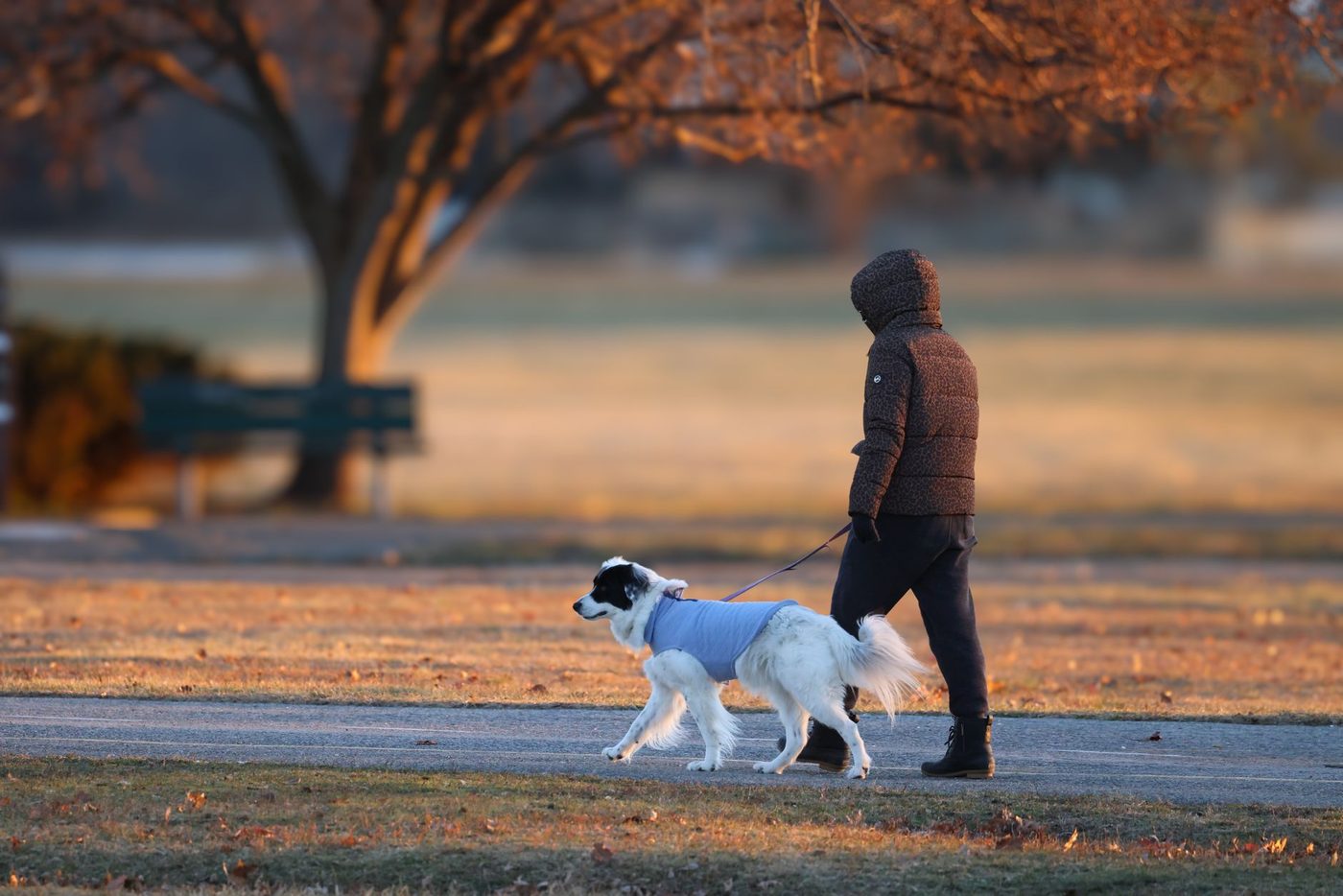
An illustration, not a real case: a dog runs up to a stranger in a Scottish park and the stranger is frightened. Under the Control of Dogs (Scotland) Act 2010, a council officer who hears of such an incident may be able to serve the owner with a written dog control notice. This article sets out what the Act and the Scottish Government’s December 2020 guidance to councils say about when that can happen, what a notice can require and what follows if it is ignored. It covers Scotland only and is general information.
What does “out of control” mean in the Act?
Section 1 says a dog is out of control if it is not being kept under control effectively and consistently by the proper person, its behaviour gives rise to alarm or apprehensiveness on the part of any individual, and that alarm or apprehensiveness is, in all the circumstances, reasonable. The apprehensiveness can relate to the individual’s own safety, the safety of another person or the safety of an animal other than the dog.
The Scottish Government guidance says both elements of the test must be met before an officer can serve a notice. The Act allows a notice where a dog has been out of control on at least one occasion since the section came into force, which the guidance dates to 26 February 2011.
Who can serve a notice, and on whom?
Notices are served by an “authorised officer” appointed by a local authority. Each authority must appoint at least one, and must satisfy itself that the person is skilled in the control of dogs.
The notice goes to the “proper person”. That is the dog’s owner, or, if the owner is under 16, a person with parental responsibilities for the owner. If the owner cannot be identified after reasonable inquiry, or serving the owner would not be reasonable, it can go to anyone aged 16 or over who appears to have day-to-day charge of the dog. The Act says it does not matter that someone else was in charge on the occasion in question, and the guidance says this is no defence. One notice covers one dog, and the guidance says the duty applies regardless of breed.
What must a notice require?
Under section 2, every notice must require the proper person to:
- comply with its terms to the satisfaction of the local authority, and tell the authority if their name or address changes;
- within 14 days of the notice taking effect, have an electronic transponder (microchip) implanted in the dog, or satisfy the authority that one was already implanted before the notice was served, and tell the authority that it has been implanted and by whom;
- be present and in charge of the dog, or ensure an “entrusted person” is, whenever it is in a place to which the public have access.
An entrusted person must be 16 or over, entrusted with the dog, made familiar with the notice’s requirements and willing and able to comply with them. The guidance adds that the person implanting the microchip must, in the local authority’s opinion, be appropriately qualified.
What else can a notice ask for?
An officer may add other steps that, in the officer’s opinion, must be taken or would help to bring and keep the dog under control. The Act lists examples: muzzling the dog or keeping it on a lead in places the public can access, neutering a male dog, keeping it away from a named place or kind of place, and completing a training course in dog control with the dog. The guidance calls the list non exhaustive and describes the notice as a civil notice.
Disagreeing with a notice
There are two routes. The first is an appeal under section 3 to the sheriff, by summary application, against the notice or any of its terms. The sheriff may suspend the notice or a term while the appeal is decided, and may uphold or discharge it, or keep it but discharge or vary a term. The Act says the decision is final.
The second is an application under section 7 to the local authority for the notice to be discharged or varied, with a written statement of the grounds. The grounds listed include that the dog has died, that the person no longer has day-to-day charge of it, or that it is no longer out of control. If the authority declines, the person can appeal to the sheriff. An authority can also discharge a notice itself; the guidance gives the example of terms having been complied with and the dog now being under control.
If a notice is not followed
Failing to comply is an offence under section 5, punishable on summary conviction by a fine not exceeding level 3 on the standard scale. On conviction the court may also disqualify the person from owning or keeping a dog for as long as it thinks fit and, where it considers the dog dangerous, may order its destruction.
A related change to the Dangerous Dogs Act 1991
The 2010 Act also amended section 3(1) of the Dangerous Dogs Act 1991 to cover a dog dangerously out of control in “any place”, not only a public place. The guidance says the person in charge may therefore be criminally liable even if this happens in the person’s own home or another private place where the dog is permitted.
The bottom line
In Scotland, the 2010 Act lets a council’s authorised officer serve a dog control notice once a dog has been out of control, meaning poorly controlled in a way that reasonably causes alarm or apprehensiveness. A notice must carry the microchip and public-place supervision requirements and may add steps such as a lead, a muzzle or training. It can be appealed to the sheriff or taken back to the council, and ignoring it is an offence. It normally goes to the owner, though the Act allows it to go to the person in day-to-day charge in the circumstances described above. The guidance says it is not a definitive interpretation of the Act, which is ultimately a matter for the courts.
Sources
- Control of Dogs (Scotland) Act 2010 (asp 9), sections 1 to 7, legislation.gov.uk; the section 1 page states there are no known outstanding effects, read 5 November 2026 (legislation.gov.uk)
- Control of Dogs (Scotland) Act 2010: guidance, updated, Part A Introduction and Part B Overview of provisions, Scottish Government, published 23 December 2020, read 5 November 2026 (gov.scot)